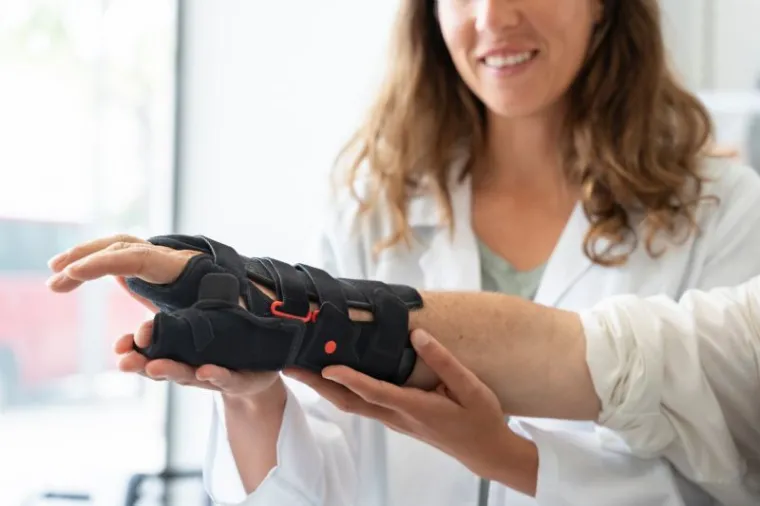
In medical care, splints are frequently used to protect injured joints and soft tissues during the healing process. By limiting movement and holding the affected area in proper alignment, they help reduce strain and prevent further injury. Healthcare providers often recommend splints for fractures, sprains, tendon injuries, after surgery, or for certain long-term joint and nerve conditions that require added stability.
Even though they are widely used, many people are unsure what splints are designed to treat, how they differ from casts or braces, or how long they should be worn. Using an improper splint or wearing one incorrectly can decrease its effectiveness and may lead to stiffness, muscle weakness, or skin irritation.
Learning how splints work, when they are appropriate, and how to use them safely can help patients and caregivers make informed decisions during recovery, post-surgical care, pediatric treatment, and ongoing support needs.
A splint is a medical device that helps support a specific part of the body while it heals. Doctors often recommend splints when bones, joints, muscles, or nerves need to be kept stable and protected from too much movement or poor positioning.
Unlike a cast, a splint doesn’t completely wrap around the limb. It’s usually open on one side and held in place with straps or wraps. This design is important because it allows room for swelling, which is common after an injury or surgery. Since splints can be removed, they also make it easier to check the skin, keep the area clean, and do gentle, approved movements when it’s safe to do so.
Splints may be used for a short time during early recovery or for longer periods when a condition needs ongoing support or controlled movement. The goal is simple: to protect the injured area, reduce discomfort, and support proper healing while allowing as much comfort and flexibility as possible.
Splints, casts, and braces all offer support, but each one is used for a different purpose during recovery.
The right choice depends on the type of injury, how far along healing is, and how much movement needs to be limited or supported.
Splints treat injuries and conditions that benefit from reduced movement, joint support, or controlled positioning. They are commonly used for:
Splints are helpful for managing ongoing conditions, such as arthritis and joint wear, carpal tunnel syndrome, tendonitis, and other repetitive stress injuries. They can also provide support for joints that feel weak or unstable. In these situations, splints help reduce strain, improve alignment, and ease discomfort during daily activities.
Healing tissues need stability to recover properly. Too much or uncontrolled movement can slow healing and increase swelling. Splints help by:
Splints are made from a combination of materials designed to balance support, comfort, and proper healing. Many include firm components, such as plastic or metal, to limit movement and help maintain proper alignment. Soft padding or foam is often added to protect the skin and improve comfort, while flexible materials allow for gentle support and limited motion when appropriate. The materials used depend on the type of injury, the level of support needed, how long the splint will be worn, and the patient’s daily activities.
Before some splints can be shaped and applied, their materials need to be softened so they can conform to the body. This step helps ensure a better fit and improves overall comfort during wear.
Applying steady, controlled heat is an important part of this process. Without it, materials may soften unevenly, making them harder to work with and less precise when molded.
A splint bath is designed to make this step more consistent. It provides even heat so materials are ready to shape without the guesswork.
 | Strava Splint Bath Basic for Thermoplastic Splint Fabrication with Digital Touch Interface and 25 Minute Heating View Product |
Options like the Strava Splint Bath help support this process, especially in clinical environments where consistency and efficiency are important.
Splints are designed to support specific joints and limbs, and using the correct type plays an important role in comfort, safety, and recovery. Each splint works by limiting harmful movement while supporting proper alignment, helping the body heal without unnecessary strain.
Below is a simple breakdown of common splint types, what they are used for, and examples of products that illustrate how they work.
Wrist splints are used to limit the bending and twisting of the wrist joint. They are commonly recommended for carpal tunnel syndrome, wrist sprains, tendon irritation, certain fractures, and post-surgical protection. Many wrist splints hold the wrist in a neutral position, which helps reduce pressure on irritated nerves, especially important when symptoms worsen during sleep. Key benefits of wrist splints include:
The ComfySplints Hand & Wrist Orthosis is an example of a soft, padded wrist and hand splint designed for comfortable positioning and long-term wear. It supports the wrist and hand in a relaxed position, helping reduce stiffness and discomfort during recovery or rest.
 | Comfy Splints Hand Wrist Orthosis View Product |
Finger splints are designed to support individual fingers after fractures, dislocations, tendon injuries, or arthritis flare-ups. Some keep the finger straight, while others support a specific joint to allow limited, safe movement.
Hand splints provide broader support and may include the wrist and multiple fingers. These are often used after surgery, neurological injury, or when preventing stiffness and tightening of the hand is part of the treatment plan. Common uses include:
The Allard Selection Ulnar Deviation Splint provides support and stabilizes the fingers. Its adjustable straps make it easy to customize the fit, helping keep the hand in a comfortable, safe position during healing or daily use.
 | Allard Selection Ulnar Deviation Splint View Product |
Thumb splints stabilize the thumb joint and often include wrist support as well. They are commonly prescribed for thumb arthritis, ligament injuries, and tendon conditions such as De Quervain’s tenosynovitis. By limiting painful thumb movement, these splints allow people to continue daily activities with less discomfort. Thumb splints help by:
The Comfort Cool Thumb CMC Restriction Splint is designed to support the base of the thumb while allowing functional hand use. Its low-profile design makes it suitable for everyday activities.
 | Comfort Cool Thumb CMC Restriction Splints and Abduction Orthoses View Product |
Elbow and forearm splints are used when elbow positioning needs to be controlled during healing or symptom management. They may be recommended after fractures, tendon repairs, surgery, or for nerve-related conditions that worsen when the elbow remains bent for long periods. These splints may:
The Bend-to-Fit Comfy Splints Elbow Orthosis provides gentle forearm and elbow support, helping guide the arm into a more comfortable resting position without feeling overly restrictive.
 | The Bend-to-Fit Comfy Splints Elbow Orthosis View Product |
Ankle and foot splints provide stability following sprains, mild fractures, tendon injuries, or surgery. Some designs are worn during walking, while others are used during rest or sleep to support proper foot and ankle positioning. They are often used to:
The A2DX Strong Ankle Support Brace is designed to provide firm ankle support during daily activities, helping improve confidence and stability while walking or standing.
 | Ankle Support Brace - A2-DX View Product |
Knee splints and orthoses are used to stabilize the knee after injury or surgery or to guide movement during rehabilitation. Some designs fully limit knee motion, while others allow controlled movement as healing progresses. Knee splints help by:
The Comfy Locking Pull Ring Knee Orthosis is an example of a knee support designed to provide stability while still allowing functional movement when appropriate.
 | Comfy Locking Pull Ring Knee Orthosis View Product |
Pre-fabricated splints are produced in standard sizes and are commonly used in home and outpatient settings. They are widely available and appropriate for many injuries and chronic conditions.
Custom splints are fabricated by trained professionals and molded to fit a person's anatomy. They are often used after surgery, neurological injury, or when precise positioning is required for protection or function.
Choosing the right splint depends on the body part, the condition, and how much movement needs to be restricted. Some injuries need almost complete immobilization, while others benefit from partial support that allows safe motion. Some key points to consider are:
These ensure comfort, effectiveness, and safe healing.
Yes. Splints are often used after surgery because they can be adjusted or removed for wound care, hygiene, or approved exercises while still protecting the healing area. Your doctor will advise how long to wear one and when movement can begin.
Wear time depends on your injury and the provider’s instructions. Some splints are used only during certain activities or at night, while others are worn continuously for days or weeks. Wearing a splint longer than recommended can lead to stiffness or weakness.
A splint should feel snug but not tight. It should not cause numbness, tingling, increased pain, or changes in skin color or temperature. Check circulation regularly, especially if swelling changes.
Call your doctor if you have increased pain, numbness, tingling, burning, or weakness. Seek care right away if fingers or toes become cold, pale, blue, or hard to move, or if you notice signs of infection or skin breakdown.
Yes, if it doesn’t fit properly or is worn too long. Possible issues include skin irritation, pressure sores, stiffness, or circulation problems. Check your skin daily and contact a healthcare provider if concerns arise.
Used across injury care, post-surgical recovery, pediatric support, and long-term joint management, splints play an important role in protecting healing tissues. When fitted and worn correctly, they can reduce pain, provide stability, and support safer movement during recovery.
Selecting the appropriate splint depends on the specific condition, the area of the body involved, and the level of support required. Ensuring a proper fit, following recommended wear times, and monitoring the skin and comfort level are all important for effective use. If symptoms worsen or new concerns develop, it is important to seek guidance from a healthcare professional.

Co-founder/CEO of Rehabmart, Pediatric Occupational Therapist, husband, and father. Passionate about connecting special needs kids with superb nutrition, sensory integration, and complementary health strategies. Excited about Rehabmart's mission to become the premier online educational platform which empowers caregivers by spotlighting innovative devices and interventions to achieve optimal patient response and recovery.