Skin conditions such as rosacea, acne, eczema, and psoriasis often involve overlapping factors, including inflammation, barrier sensitivity, and immune system response variability. Because symptoms can shift over time, many individuals look for non-invasive tools that can be integrated into consistent skincare routines without adding irritation. Red light therapy is one approach that uses controlled LED light exposure to interact with skin at multiple depths.
Most skincare-focused systems use wavelengths in the red spectrum (630–660nm) and near-infrared spectrum (810–850nm). Red light is generally associated with surface-level skin appearance and visible redness, while near-infrared light reaches deeper layers where inflammatory activity and connective tissue processes may occur. Some devices also incorporate blue light (~415–480nm), which is often used in routines addressing surface-level bacterial factors associated with acne and rosacea.
At a biological level, red light exposure is believed to influence mitochondrial activity, supporting ATP production - the energy cells use for normal function and repair processes. In skincare applications, this is often discussed in relation to supporting skin balance, barrier function, and visible tone consistency. Multi-wavelength systems allow different layers of the skin to be addressed within a single routine, especially when using a red light therapy panel, mask, or handheld device.
For people managing ongoing skin concerns, consistency matters more than complexity. At-home systems are designed to deliver structured light exposure without requiring clinical visits or complex procedures. The following outlines how different device types apply these principles in practice.
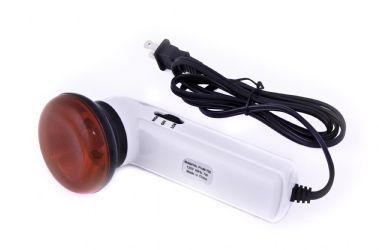
~3.jpg&newwidth=365&maxheight=200 "Medlight 630 Pro Hand Held Red Light Therapy") | Medlight 630 Pro Hand Held Red Light Therapy View Product |
The Medlight 630 Pro is a handheld LED device designed for targeted red light application. It primarily emits 630nm red light, a wavelength commonly associated with surface-level skin support and visible redness management.
This device delivers focused LED output at close range, allowing users to target specific areas such as localized irritation, blemish-prone zones, or uneven redness. While irradiance varies by configuration, handheld systems are generally designed for concentrated exposure rather than broad-area treatment.
Compared to a red light therapy panel, this format prioritizes precision over coverage, making it suitable for spot-based routines.
 | Red Light Therapy Mask with Infrared and Blue Light | TheraFace Mask Glo | 504 Medical-Grade LEDs and Vibration Therapy View Product |
The TheraFace Mask Glo is a wearable LED facial system that delivers full-face light exposure in a hands-free format. It combines red light (~630nm), near-infrared (~830nm), and blue light (~415nm) depending on the selected mode.
The device uses a fixed LED layout to maintain a consistent distance across facial contours, helping ensure even coverage during each session. Published specifications indicate irradiance around ~70 mW/cm² in red and near-infrared modes, with shorter, structured treatment cycles designed for routine use.
Unlike manual skincare or spot-based devices, this mask delivers uniform exposure across the entire face in a single session.
 | Red Light Therapy Neck Mask for Anti Aging Skin Rejuvenation and Collagen Support | Holistix GLO View Product |
The Holistix GLO Neck Mask is a wearable LED device for the neck and lower facial area, where skin is often exposed to repeated movement and environmental stress.
It uses red (630–660nm) and near-infrared (around 830nm) wavelengths to provide layered skin support across both surface and deeper tissue levels. LED placement ensures consistent exposure without manual repositioning.
Compared to facial masks or panels, this device focuses on a frequently overlooked treatment area with simplified application.
 | LED Red Light Therapy Panel, Total Spectrum MINI by RLT Home | 72 LEDs, 7 Wavelengths, Supports Targeted Therapy View Product |
The Total Spectrum MINI LED Red Light Therapy Panel is a compact system designed for facial and small-area use. It emits red (630/660nm) and near-infrared (810–850nm) wavelengths commonly used in skincare light therapy routines.
Panel systems generally provide higher irradiance than wearable devices due to direct LED output and fixed positioning. This allows for more controlled exposure intensity depending on distance and duration of use.
The device works by delivering concentrated light over a defined treatment area, supporting both surface-level skin appearance and deeper tissue interaction.
Skin-related conditions often require routines that are consistent, manageable, and adaptable to daily life. Red light therapy offers a structured, non-invasive way to support skincare habits without adding procedural complexity or irritation risk.
With device options ranging from handheld applicators to full-face masks and compact panels, users can select tools based on precision, coverage, and ease of use. Each delivers light in a controlled way, allowing routines to remain simple while still structured.

Megan Smith, PT, ED of Human Resources & PEO Services
Megan has been a part of Rehabmart since its inception nearly 20 years ago. For the past several years she has been enjoying her role as HR Director while maintaining her Physical Therapy license. When she isn't working on her next in-service or working to find a new team member, she enjoys her five children, helping those who have PT type ailments, baking, practicing yoga, and working out.






~3.jpg&maxheight=250&width=365&product_name=Medlight 630 Pro Hand Held Red Light Therapy "Medlight 630 Pro Hand Held Red Light Therapy")