
In home care and recovery settings, having the right bed can make a significant difference in comfort and daily support. Some adjustable models are designed to combine electric controls with manual features, allowing the head and foot sections to be repositioned with a remote while the overall height is adjusted using a crank or lever. This balanced design offers flexibility without the higher cost of fully electric options. Often used in rehabilitation, long-term care, and at-home recovery, a semi-electric hospital bed helps improve positioning, pressure management, and caregiving safety. In this article, we will explore how a semi-electric hospital bed works, its key benefits, and what to consider when choosing one.
Key Points
- Adjusts head and foot with electric controls
- Changes height manually
- Helps with positioning and comfort
- Supports safe transfers in and out of bed
- Fits home or care environments
A semi-electric bed makes it easier to change positions, reducing the need for heavy lifting. Adjusting the head angle can improve breathing and help reduce acid reflux, while raising the knees can relieve back pain and make sitting up more comfortable. Manual height adjustments allow caregivers to work at safe levels, protecting their backs and reducing strain. The remote gives users control, enhancing comfort and independence.
How Does a Semi-Electric Bed Help Daily Care?
Semi-electric beds can simplify daily routines for both users and caregivers by making positioning and transfers more manageable. For individuals with limited mobility, being able to raise the head or adjust the foot section supports activities like eating, reading, or resting comfortably. Models such as the Protekt Akra-SE are designed with user-friendly controls that allow caregivers to adjust positioning with a handheld remote, while the manual crank makes height changes smoother during dressing, hygiene care, or wheelchair transfers.
In addition to positioning support, many beds are built with safety and pressure management in mind. Features like side rail compatibility and reinforced mattress platforms help promote stability and reduce strain during movement. The Competitor Semi-Electric Bed, for example, combines reliable frame construction with adjustable functionality to support everyday care needs. Together, these types of semi-electric beds provide a practical balance of comfort, safety, and ease of use in home care environments.
Key Points
- Makes position changes easier
- Helps with transfers and care tasks
- May improve sleep comfort
- Supports standard hospital-style mattresses
- Often includes safety side rails
Being able to adjust the bed can reduce discomfort from lying in one position too long. It can also help keep the spine aligned and ease pressure on the hips and shoulders. These changes can help you breathe better, improve digestion, and enhance rest. For caregivers, height changes help reduce bending and awkward lifting during care tasks. This support can make routines smoother and less tiring for everyone involved.
Final Thoughts
Combining electric positioning with manual height adjustment, this type of bed offers a practical balance between functionality and affordability. A semi-electric hospital bed supports comfort, daily care routines, and safer caregiving without the higher cost of fully electric models. By assisting with positioning, pressure relief, and transfers, it can improve both user independence and caregiver efficiency.
When choosing the right model, consider features such as side rail options, ease of crank operation, mattress compatibility, and overall frame stability. If you have specific medical needs or concerns about transfers and positioning, consult your doctor or therapist to ensure the bed is appropriate for your safety and care requirements.
Sources
- American Spinal Injury Association. (2022). Guidelines for use of durable medical equipment for persons with spinal cord injury and dysfunction. American Spinal Injury Association.https://asia-spinalinjury.org/wp-content/uploads/2023/03/DME-2022-Booklet-10.20.22.pdf
- Zhou, J., & Wiggermann, N. (2021). The effects of hospital bed features on physical stresses on caregivers when repositioning patients in bed. Applied Ergonomics, 90. https://www.sciencedirect.com/science/article/pii/S000368702030209X?via%3Dihub
- Caboor, D. E., Verlinden, M. O., Zinzen, E., Van Roy, P., Van Riel, M. P., & Clarys, J. P. (2000). Implications of an adjustable bed height during standard nursing tasks on spinal motion, perceived exertion and muscular activity. Ergonomics, 43(10), 1771–1780. https://www.tandfonline.com/doi/abs/10.1080/001401300750004177
Author:
Mike Price, OT, CIO/CMO
Co-Founder of Rehabmart and an Occupational Therapist since 1993. Mike has spent his professional career working in multiple areas of Occupational Therapy, including pediatrics, geriatrics, hand therapy, ergonomics and inpatient / outpatient rehabilitation. Mike enjoys writing articles that help people solve complex therapeutic problems and make better product choices.
Meet all of our experts here!






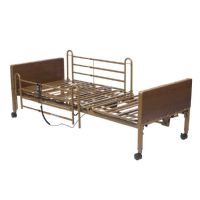



.png&maxheight=250&width=365&product_name=Medline Semi Electric Hospital Bed Package With Adjustable Supports and Rolling Casters for Homecare "Medline Semi Electric Hospital Bed Package With Adjustable Supports and Rolling Casters for Homecare")
