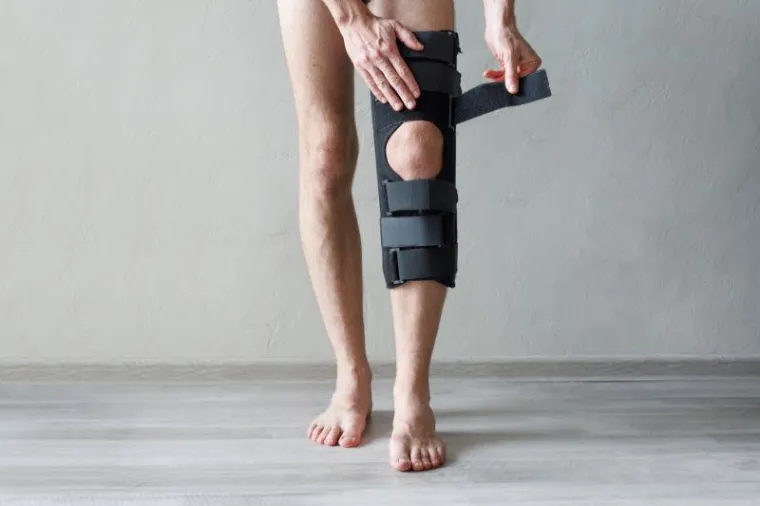
Hinged knee brace support can make a meaningful difference if you are dealing with knee pain, instability, or recovery after an injury or surgery. These braces are designed with side hinges that help guide knee movement while still allowing comfortable bending and straightening. Whether you are returning to activity or managing everyday mobility, the right hinged knee brace can provide stability, confidence, and protection.
Hinged knee braces are often used to support ligaments such as the ACL and MCL, especially when the knee needs more control than a compression sleeve can provide. They offer added structure that helps limit harmful motion while allowing natural movement. This combination makes them a popular choice for both short-term recovery and longer-term knee support.
A hinged knee brace is a knee support that uses side hinges to help stabilize the joint. The hinges guide the knee through safe movement while limiting harmful side-to-side motion.
Depending on the design, the hinges may be:
Most hinged knee braces are made from neoprene, breathable fabric, or supportive frames. They also include adjustable straps to help improve fit, comfort, and stability.
Hinged knee braces are used when the knee needs extra support and control. They are often recommended for:
Some people wear a hinged knee brace for a short time during recovery, while others use one long-term for added stability.
The main job of a hinged knee brace is to support the knee while allowing safe movement. The side hinges help the knee bend and straighten while limiting movements that can strain injured ligaments.
Hinged knee braces work by:
Not all knee braces provide the same level of support.
Hinged knee braces are usually recommended when the knee needs more control, not just pain relief.
Wraparound hinged knee braces open fully and fasten with straps, making them easy to put on and adjust. They are commonly used for daily activities, mild ligament sprains, and arthritis-related knee support. Options like the Economy Wraparound Hinged Knee Brace are designed for straightforward, everyday support while allowing flexibility in fit and comfort.
 | Economy Wraparound Hinged Knee Brace View Product |
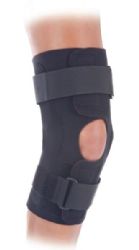
Functional hinged knee braces provide higher levels of support and stability. They are often worn during sports or when returning to activity after an injury, especially involving the ACL or other major ligaments. These braces typically feature stronger frames and bilateral hinges, such as those found in the Gladiator ACL Lite Brace, which is built to support more demanding movement while maintaining knee alignment.
.jpg&newwidth=365&maxheight=200 "Gladiator ACL Lite Brace") | Gladiator ACL Lite Brace View Product |
Osteoarthritis hinged knee braces are designed to help shift pressure away from the more painful side of the knee joint. By unloading stress from the affected area, they can reduce discomfort during walking or standing. Some supportive neoprene-based hinged designs, such as the SafeTsport Neoprene Hinged Knee Brace, are often used for mild to moderate arthritis support in daily routines.
 | Actimove Sports Knee Brace with Adjustable Horseshoe and Condyle Pads View Product |
Pediatric hinged knee braces are specifically designed to fit children’s proportions and growing bodies. They provide stability during healing while still allowing safe movement for play and everyday activity. Braces like the Pediatric Neoprene Hinged Knee Brace offer supportive structure with a softer, flexible design appropriate for younger users.
 | Pediatric Neoprene Hinged Knee Brace View Product |
Proper care helps your brace perform well over time. Clean it as directed by the manufacturer, regularly check straps and hinges, and make sure it continues to fit comfortably. Replacing worn parts when needed helps maintain consistent support and comfort.
Hinged knee braces help guide knee movement and reduce side-to-side motion that can strain the ACL. By providing controlled support, they protect healing tissues and help users feel more stable during daily activities and rehabilitation exercises. This added stability can improve confidence and support a safer return to movement.
Yes, many hinged knee braces are designed for daily walking and routine activity. Choosing a brace with adjustable straps and breathable materials improves comfort during extended wear. A well-fitted brace supports the knee without interfering with normal walking motion.
Knee sleeves mainly provide compression and warmth. Hinged knee braces include side supports that help control movement and provide stronger stabilization. This makes hinged braces more appropriate for ligament injuries or instability, while sleeves are better for mild swelling or general support.
Yes, hinged knee braces can be used for children when recommended by a healthcare professional. Pediatric designs are sized and shaped to fit growing bodies while offering support for injury recovery or joint stability during daily activities and play.
A hinged knee brace should feel snug but not tight. It should not cause numbness, tingling, or color changes in the leg. You should be able to bend and straighten your knee comfortably while the brace stays securely in place.
Hinged knee brace support plays an important role in protecting the knee, improving stability, and supporting recovery. With options designed for adults, children, daily wear, and active use, there is a hinged knee brace to meet many different needs. Choosing the right brace and wearing it as recommended can help you move with greater comfort, confidence, and peace of mind.

Co-founder/CEO of Rehabmart, Pediatric Occupational Therapist, husband, and father. Passionate about connecting special needs kids with superb nutrition, sensory integration, and complementary health strategies. Excited about Rehabmart's mission to become the premier online educational platform which empowers caregivers by spotlighting innovative devices and interventions to achieve optimal patient response and recovery.








.jpg&maxheight=250&width=365&product_name=Gladiator ACL Lite Brace "Gladiator ACL Lite Brace")


